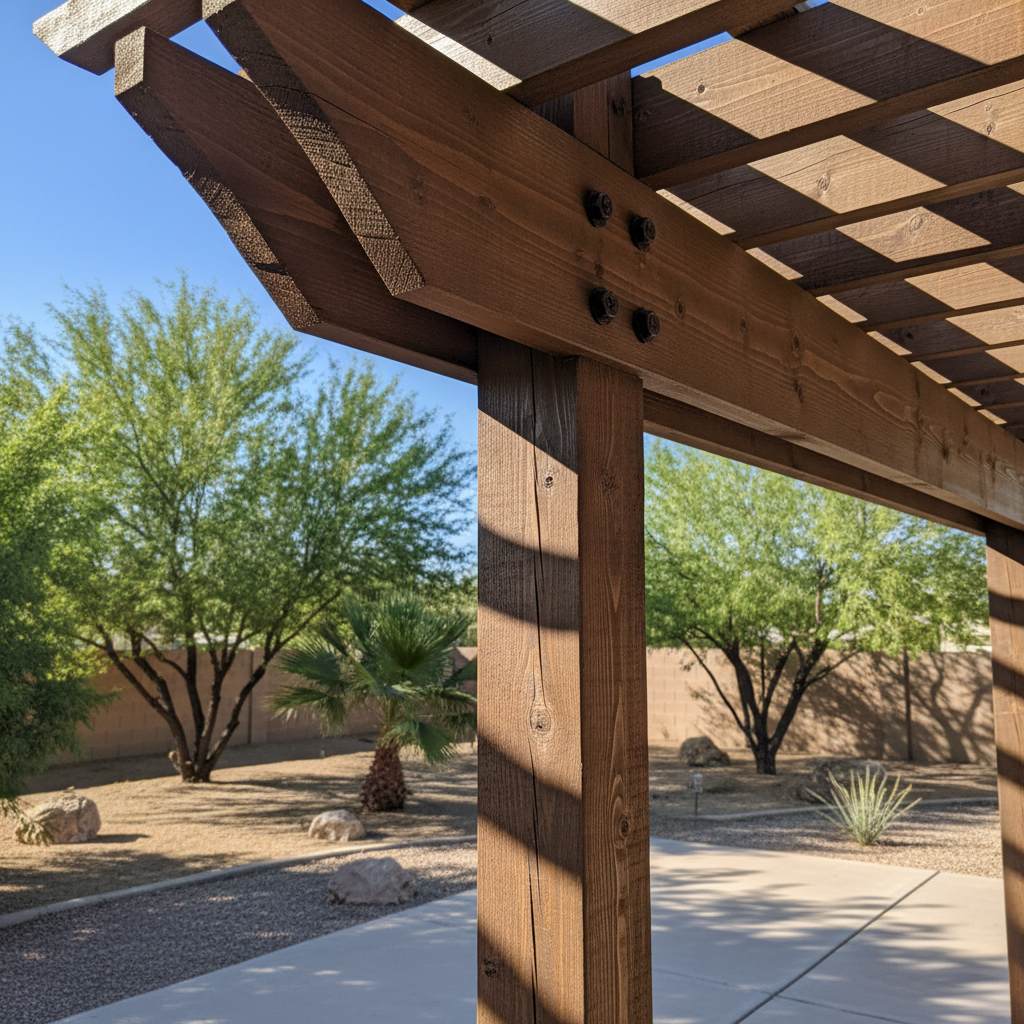
Alright, let's talk pergolas. I get a lot of questions about these, and for good reason. They add a ton of character and some much-needed shade to our Arizona homes. Here in Coolidge, with our intense sun and those breezy afternoons, a well-built pergola isn't just a luxury; it's practically a necessity if you want to enjoy your outdoor space. So, I've rounded up the most common questions folks ask me about building a pergola. Let's get into it.
Do I even need a permit for a pergola in Coolidge?
This is probably the first thing most homeowners ask, and it's a smart question. The short answer? Probably. It really depends on the size and how it's attached. Generally, if your pergola is over 200 square feet, or if it's connected to your house, you're going to need a permit from the City of Coolidge. Even if it's smaller and freestanding, it's always best to check with the city's planning and zoning department. You don't want to build something awesome only to find out you have to tear it down or pay a big fine, right? I always handle the permit process for my clients because, frankly, it can be a headache if you don't know the ropes.
What's the best material for a pergola in our Arizona climate?
This is a big one, especially with our relentless sun. You've got a few main options, and each has its pros and cons for Coolidge. Pressure-treated wood, like pine or cedar, is a popular choice because it's usually more affordable upfront. It looks great, but it's going to need regular maintenance – staining or sealing every couple of years to fight off the UV rays and prevent warping or cracking. Then there's aluminum. It's low maintenance, super durable, and won't rot or get eaten by termites, which is a real plus out here. It can get hot to the touch, though, and the look is more modern. Vinyl is another low-maintenance option; it won't rot or need painting, but it can sometimes look a bit less substantial than wood. For my money, if you want that classic wood look with less fuss, I often recommend a high-quality composite material or even steel. They're built to withstand our extreme temperature swings and that constant UV exposure without falling apart after a few years. It's an investment, but it pays off in longevity and less work for you.
How much does a pergola typically cost?
Alright, the money question. This is tough to give a single number because it varies wildly. A small, basic, freestanding wood pergola might start around $3,000-$5,000. But if you're talking about a larger, custom-designed, attached pergola with premium materials like aluminum or steel, maybe with adjustable louvered roofs or built-in lighting, you could be looking at $10,000 to $20,000 or even more. Factors like the size, material, complexity of the design, foundation work, and any extra features all play a role. When I give you a quote, I break down every cost so you know exactly what you're paying for. Don't just go for the cheapest bid; make sure you're comparing apples to apples on materials and craftsmanship. A cheap build now can mean expensive repairs later, especially with our intense sun beating down on it.
Can a pergola really provide enough shade in Coolidge?
Absolutely, but it depends on how it's designed. A traditional pergola with widely spaced rafters offers dappled shade, which is nice, but might not be enough during the hottest parts of a July afternoon when the sun's just blasting down. To get serious shade, you'll want to consider a few things. You can add a shade cloth or retractable canopy on top, which is a popular and effective solution. Or, design the pergola with closer-set rafters or even a solid roof section. Another trick is to orient the pergola correctly based on the sun's path over your yard. For example, if your backyard faces west, you'll want to think about how to block that brutal afternoon sun. We often build pergolas with one side having more coverage or even a privacy screen to cut down on that low-angle sun. It's all about strategic design to maximize your comfort.
How long does it take to build a pergola?
Once we've got the design locked in and the permits (if needed) are approved, a typical pergola build usually takes anywhere from a few days to a couple of weeks. A smaller, simpler, freestanding structure might be done in three to five days. A larger, more complex, or custom-designed attached pergola with intricate details or a specialized foundation could take two weeks or more. Weather can sometimes be a factor, especially if we hit a monsoon storm, but generally, we work pretty efficiently. We're not going to drag our feet; we know you want to start enjoying your new outdoor space.
What kind of maintenance does a pergola need in Arizona?
This goes back to your material choice. If you go with wood, you're looking at cleaning it annually and then re-staining or re-sealing it every two to three years. That's crucial to protect it from UV damage and moisture. Aluminum, vinyl, or composite pergolas are much lower maintenance. Usually, a good wash down with a hose and maybe some mild soap once or twice a year to get rid of dust and grime is all they need. You'll want to check for any loose fasteners or connections periodically, no matter the material, just to make sure everything's still solid. Here in Coolidge, with all the dust we get, a quick rinse is always a good idea to keep it looking fresh.
Look, building a pergola is a great way to enhance your home and get more use out of your yard, especially here in Arizona. If you've got more questions or want to talk about a specific project, don't hesitate to reach out to us at Coolidge Deck Builders. We're always happy to help you figure out the best solution for your home.